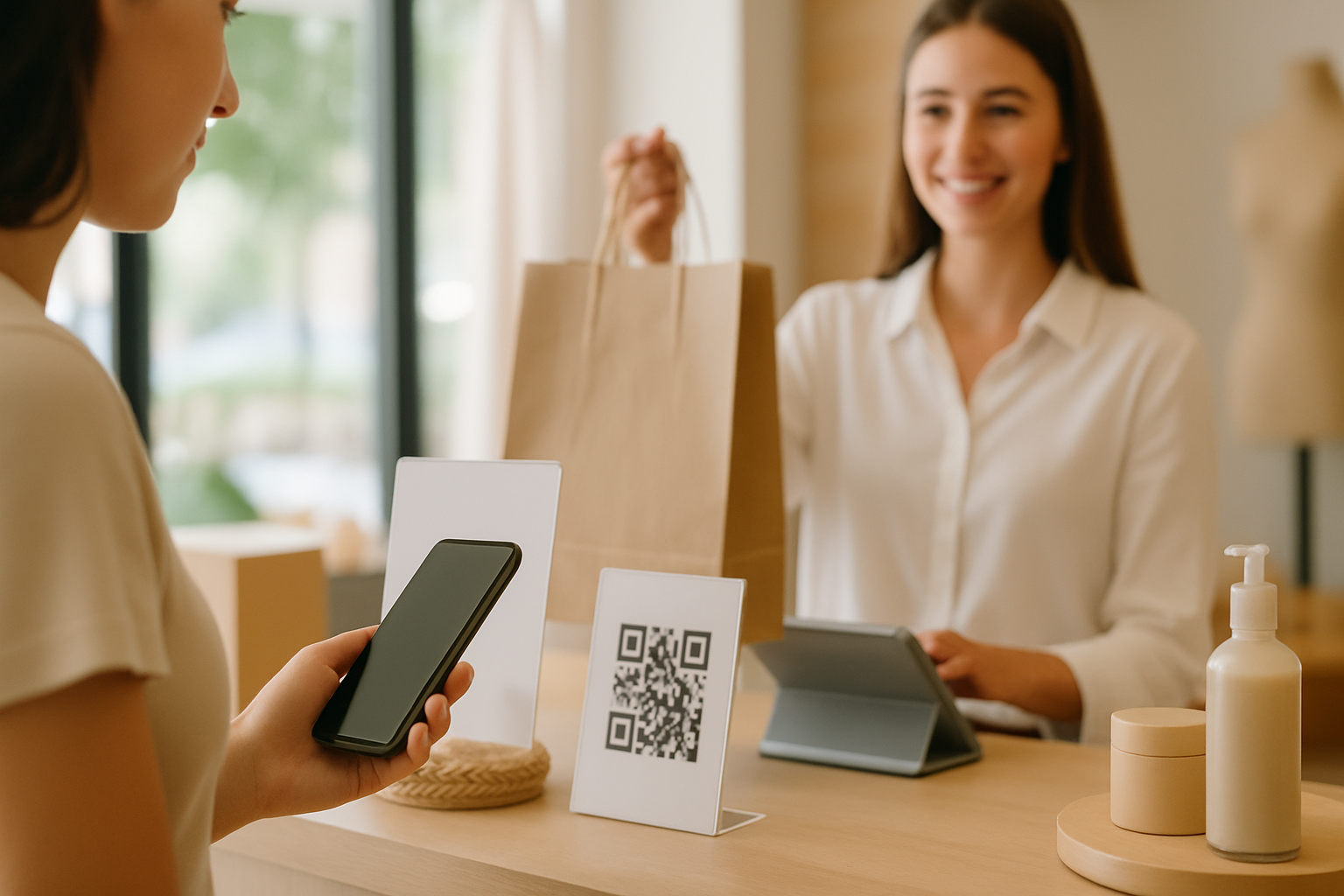
Summer brings a specific mix of conditions that make QR code campaigns easier to run and easier to screw up. Foot traffic is up, attention spans are down, and customers are often in unfamiliar places — browsing a market stall, waiting for a food truck, or sitting at an outdoor terrace. The window to capture a scan is short. These six tactics are built around that reality.
1. Put Your Code Where People Are Already Waiting
Outdoor queues, festival entry points, and beach-side retail spots are natural dwell-time zones. A static poster with a QR code offering something immediate — a free drink upgrade, a loyalty stamp, a sample request — converts well precisely because people have nothing better to do than look at their phones.
Placement height matters more outdoors. Eye level for a standing adult is roughly 155–165 cm. Laminated prints should be positioned at that height and angled slightly downward (10–15°) to reduce glare from direct sunlight. Matte laminate performs significantly better than gloss in bright outdoor conditions — print finishes affect scan reliability in ways that most designers underestimate.
2. Use Time-Limited Offers to Force the Scan Now
A QR code that links to a page saying "20% off today only, expires at close of business" creates urgency without requiring you to change the physical print. If you're using a dynamic QR code, you can swap the destination URL after the offer ends — no reprint needed.
This matters because summer campaigns often run in short bursts: a weekend market, a three-day festival, a flash sale tied to a heat wave. Dynamic codes let you reuse the physical asset across multiple offers across the season. If you're not sure whether a static or dynamic code fits your setup, understanding the difference between the two is the right starting point before you print anything.
3. Run a "Scan to Enter" Giveaway at Events
Summer events are giveaway territory. The mechanic is simple: scan the code, submit your email or answer one question, be entered to win. What makes this work is the immediate gratification loop — the landing page should confirm entry instantly and show a countdown to the draw date.
A few specifics that improve conversion:
- Keep the form to one or two fields maximum. Every additional field drops completions.
- Show the prize visually, above the fold, before any form fields appear.
- Display how many people have already entered — social proof helps at events where trust is lower.
- Add a referral mechanic: "Share this link for a second entry" costs nothing and extends reach.
4. Geo-Target Your Offer Using Multiple Codes
If your business operates across several summer locations — pop-ups, markets, partner venues — don't use the same QR code everywhere. Create a separate dynamic code per location, link each to a location-specific landing page, and track scan volume by location through your analytics dashboard.
This approach tells you which venue drove the most engagement, which offer copy resonated, and which location underperformed. That data shapes your autumn budget allocation. Our QR code analytics guide covers the six metrics worth tracking — scan-to-conversion rate is the one most summer campaigns ignore entirely.
5. Embed a QR Code in Takeaway Packaging
Packaging is a summer-specific opportunity because takeaway volume spikes. A QR code printed on a coffee cup sleeve, a food box, or a paper bag has a captive audience — someone who already bought from you and is likely eating or drinking in a nearby outdoor space.
Effective packaging codes typically link to one of three things:
- A loyalty scheme sign-up
- A review prompt (Google, Tripadvisor, or equivalent)
- A behind-the-scenes or "how it's made" video that deepens brand connection
Avoid linking to your homepage. Scanners who just bought your product don't need to be sold — they need a reason to come back or tell someone else.
6. Create a "Scan to Unlock the Menu" Experience
For cafés, food trucks, and pop-ups, a physical menu is expensive to reprint when prices or items change mid-season. A table-tent QR code linking to a digital menu solves this — but you can go one step further by using time-based routing to show a brunch menu before noon and a dinner menu after 5 pm, automatically.
The same approach works for daily specials: update the destination URL each morning without touching the physical code. Customers who scan it regularly start to expect that it's always current, which builds a habit. The Super QR Code Generator supports dynamic destination switching on all paid plans, so you're not locked into a static destination once the print is done.
Key Takeaways
- Outdoor placement requires matte laminate, correct height, and a slight downward angle to survive summer glare.
- Dynamic QR codes let you reuse physical prints across multiple short-run summer offers without reprinting.
- Event giveaways convert best with minimal form fields, visual prize display, and instant confirmation.
- Multiple location-specific codes give you the per-venue data you need to make smarter autumn decisions.
- Packaging codes perform well because the audience is already a customer — skip the sales pitch and offer loyalty or review prompts instead.
- Time-based menu routing is a practical fix for seasonal menus that change faster than print budgets allow.