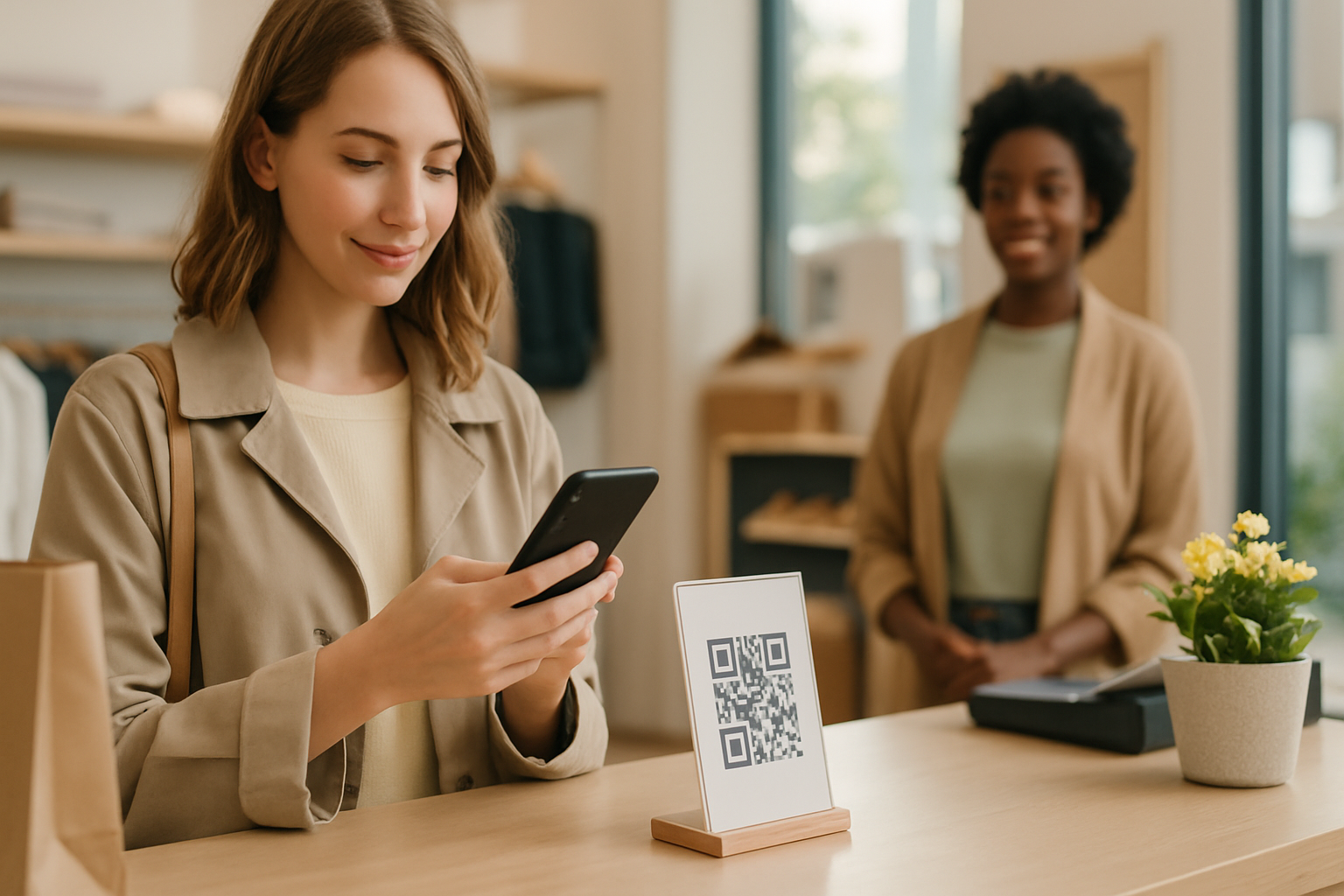
Spring is one of the most underused windows in the seasonal marketing calendar. Foot traffic picks up, consumer spending loosens after the post-holiday slump, and your competitors are still running the same tired email blasts they used in February. A well-timed QR campaign placed at the right physical touchpoint can capture that momentum — but only if you treat it as a system, not just a sticker on a window.
Here are five specific tactics for spring 2026 that go beyond "put a QR code on your flyer."
1. Easter Flash-Sale QR Codes on Packaging and Bags
If you sell physical products, the shopping bag or product box leaving your store is prime real estate between now and Easter weekend. Print a dynamic QR code that links to a 48-hour flash-sale landing page — timed to go live Good Friday morning and expire Sunday night.
Why dynamic matters here: you can update the destination URL without reprinting anything. If your sale sells out early or you swap the offer, you change the link in your dashboard, not your printed materials. For a full breakdown of why this flexibility pays off, see the guide to static vs dynamic QR codes.
What to include on the printed material:
- A short call to action ("Scan for an Easter weekend exclusive")
- The expiry date so customers feel urgency
- Your logo inside the QR code for brand recognition
2. Mother's Day Gift-Guide Codes in Physical Stores
Mother's Day (second Sunday of May in most markets) creates a predictable spike in "I don't know what to buy" shoppers. Point-of-sale QR codes that link to a curated gift guide — filtered by budget or recipient type — reduce decision fatigue and increase average order value.
Place codes at the register, on shelf talkers near your higher-margin products, and on any in-store signage. Track which placement drives the most scans. If you are already capturing scan attribution data, you can tie each placement back to actual purchases and know which shelf position is worth keeping in future campaigns.
3. Spring Loyalty Punch-Card Replacement
Paper punch cards get lost. A QR code that links to a digital stamp card keeps the loyalty mechanic alive without the waste. For spring specifically, create a "Spring 5-Visit Challenge" — customers scan at each visit, the page tracks their stamp count (via a form submission or loyalty app link), and after five visits they unlock a spring-exclusive reward.
This tactic works well for cafés, salons, fitness studios, and any business with repeat footfall. The QR code stays the same across the whole spring season; only the destination page content changes as customers progress.
Set-up checklist:
- Dynamic QR code pointing to your loyalty landing page
- Page collects email or phone at first scan (builds your list)
- Automated confirmation message tells customers how many stamps they have
- Offer a reward that is seasonal — a spring drink, a discount on a summer service, etc.
4. Outdoor Event and Market QR Codes (April–May)
Farmers markets, spring fairs, pop-up stalls, and outdoor festivals return in force from April. These environments are brutal for printed QR codes: sunlight causes glare, surfaces are uneven, and codes get wet.
A few practical rules for outdoor placement:
| Problem | Fix |
|---|---|
| Glare on glossy paper | Use matte laminate or rigid foam board |
| Low-contrast in bright light | Increase contrast; dark code on white, never dark on dark |
| Code gets wet or dirty | Laminate or use weatherproof vinyl |
| Wind knocks over stands | Attach to a weighted A-frame or tent pole |
Your QR code's design also needs to hold up visually. High-contrast modules are non-negotiable outdoors — the rules for QR code color contrast are worth reviewing before you send anything to print.
5. Spring Referral Codes for Existing Customers
Referral campaigns are strongest when existing customers have a reason to share immediately. Spring gives you that reason: spring cleaning, home refresh projects, garden prep, and back-to-routine energy after winter.
Create a unique QR code for each existing customer (or customer segment) that pre-loads their referral ID into a landing page URL. When a friend scans the code and makes a purchase, the referral is automatically attributed.
This requires a bit more setup than a single campaign code, but the payoff is significant — referred customers tend to have higher lifetime value, and the spring framing gives your outreach a natural hook that doesn't feel manufactured.
Send the referral QR code via email or include it on a printed card tucked into spring orders. For businesses exploring this kind of layered campaign structure, our QR code generator makes it straightforward to create multiple dynamic codes with individual tracking.
Key Takeaways
- Easter and Mother's Day are the two highest-leverage spring windows — plan codes for each separately, with different destinations and tracking.
- Dynamic QR codes are essential for any campaign with a changing offer; reprinting because a sale ended is an avoidable cost.
- Outdoor codes need matte laminate, high contrast, and physical anchoring — test your code in bright light before the event.
- Loyalty and referral mechanics work better as QR campaigns than as paper cards because scan data is trackable and the customer experience is smoother.
- Track at least scan volume, time of scan, and device type so you can compare what worked this spring against your autumn campaigns.